
Trusted by leading D2C and B2B brands worldwide
One Profile for Every Customer
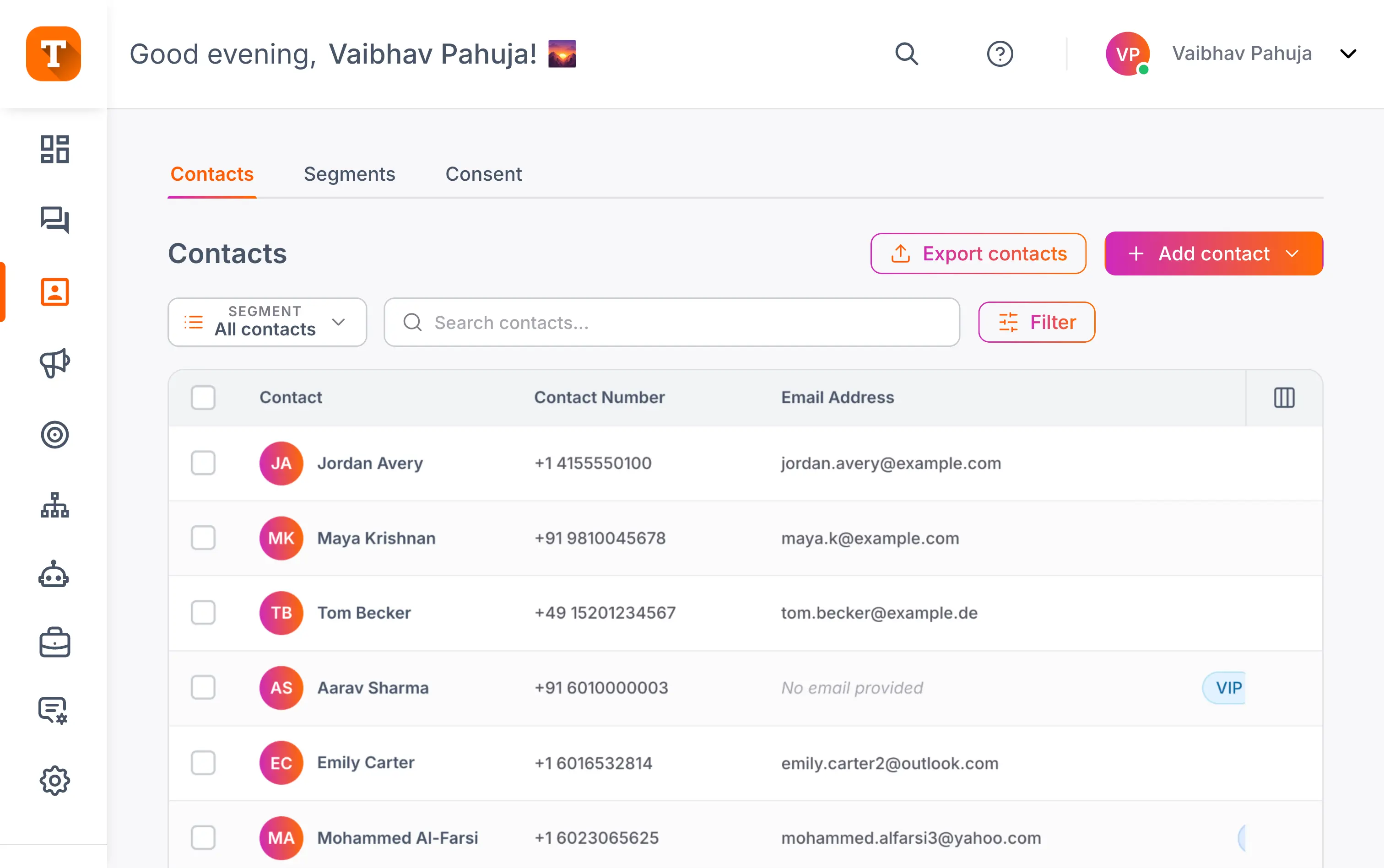
Every chat, order, tag, and consent record rolls up into a single contact card. Your team opens one profile and sees the whole relationship, no scattered notes and no guesswork.
Everything a Contact Card Should Hold
Unified Contact Profiles
See every customer's details in one profile. No more scattered notes or missing information across chats.
Custom Tags
Create tags for your business needs. Organize leads, segment customers, and track conversations easily.
Custom Fields
Add your own fields like birthday, plan, or city. Capture the data your business cares about on every contact.
Powerful Search & Filters
Find anyone fast with name, keyword, tag, or date filters. Always locate the right contact instantly.
Import, Export & Sync
Bring in leads from CSV or CRM. Keep data synced, updated, and export anytime for analysis.
More Than a List: Segments, Import, Export
The three things that turn a pile of numbers into an audience you can actually reach.
Two Ways to Group People: Dynamic and Static
A segment is simply a group of contacts you can message as one. A dynamic segment is built from rules, so it keeps itself up to date: anyone who matches joins automatically and anyone who stops matching drops out. A static segment is a fixed list you pick once and it never changes.
Bring Your Whole List In, Clean and Ready
Upload a CSV or Excel file and map your columns to Transket fields once. Numbers are checked and formatted, duplicates are merged instead of doubled, and every contact keeps its tags and consent record, so you can start messaging the same day.
Your Data Stays Yours to Take
Export any segment, or your whole audience, as a CSV or Excel file with the columns you choose. Use it for reporting, to sync a CRM, to hand a list to your accountant, or simply to keep your own backup. No support ticket, no waiting.
Frequently asked questions
Everything you need to know about managing WhatsApp contacts.
Automatically. Every person who messages you, scans a QR code, or clicks a Click to WhatsApp ad is saved as a contact, with their source and consent status recorded from the first interaction. You can also import existing lists from a CSV or Excel file. Nothing needs to be typed in by hand for day-to-day capture.
Yes, in two ways. A dynamic segment is built from rules, like tag, city, or last reply, so it keeps itself up to date: anyone who matches joins automatically and anyone who stops matching drops out. A static segment is a fixed list you pick once, useful for a one-off campaign or an imported batch. Sending to a segment instead of your whole audience keeps messages relevant.
Yes. Upload a CSV or Excel file, map your columns to Transket fields once, and reuse the same mapping next time. Numbers are checked and formatted, duplicates are merged instead of doubled, and invalid numbers are flagged before anything is sent. Tags and consent are applied on import, so segments work immediately. Importing a list does not create consent; you still need opt-in to message people.
Yes. Every chat, order, tag, and consent record rolls up into a single contact card, with a live activity trail of replies, orders, and opt-ins as they happen. Your team opens one profile and sees the whole relationship, with no scattered notes and no guesswork. Custom fields like city, plan, or lifetime value sit on the same card.
Yes, whenever you like. Export any segment, or your whole audience, as a CSV or Excel file with only the columns you choose. Consent dates and tags are included, so records stay audit-ready, and no support ticket is needed. Your contacts are never locked in; use exports for reporting, syncing other systems, or keeping your own backup.
Consent status sits on every profile, so you always know who you can message. Opt-ins are recorded per contact with their date and source, and the status updates when someone opts out. That record travels with the contact through imports, exports, and segments, so a consent question is answered by opening the card, not by digging through history.